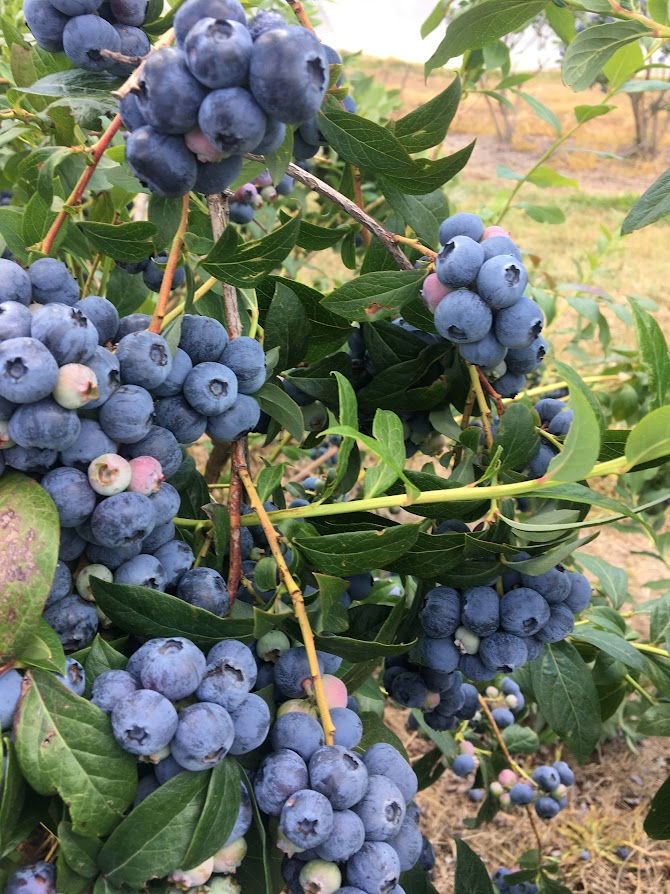


No fruit flies on us! We don't use any pesticides...

Updated: Oct 22, 2025
Below is an article on residue testing conducted on supermarket blueberries, pretty scary stuff to think that these chemicals are being applied to our food and potentially causing health problems.
Australian blueberries show pesticide residues
Blueberries purchased from supermarkets in northern New South Wales have tested positive for multiple pesticide residues, including dimethoate and thiometon, according to research conducted by Professor Kirsten Benkendorff of Southern Cross University. Samples were analysed at a nationally accredited laboratory in Sydney.
Dimethoate, used against fruit flies, was found at levels that could exceed the Acceptable Daily Intake (ADI) in both children and adults after consuming less than a standard 125 g punnet. Tests on three blueberry samples showed residue levels high enough that a 20 kg child would reach their ADI after eating only a handful. Dimethoate remains legal in Australia but was banned in the EU in 2019 and is classed by the U.S. Environmental Protection Agency as a possible human carcinogen.
In addition, thiometon, an insecticide banned in Australia since 2001, was detected in several samples. An initial round of testing found it at high levels in one blueberry sample. A second round covering 11 blueberry and five raspberry samples detected thiometon in six blueberry samples, including one organic, and in all raspberry samples at low levels.
Benkendorff said the detection in organic fruit "raised questions about how and why [thiometon] is getting in." Agronomist Marc Percival suggested the source may be spray drift or water contamination from neighbouring properties. He noted the chemical is unlikely to persist in soil for decades, as it typically breaks down within weeks.
Industry group Berries Australia conducted its own testing of 14 supermarket samples, which it said found no thiometon and no breaches of legal residue limits. Chief executive Rachel Mackenzie said it was unlikely growers would use thiometon, given that alternative products are available.
The Australian Pesticides and Veterinary Medicines Authority (APVMA) has since announced a review into dimethoate use on blueberries, raspberries, and blackberries, citing new consumption data showing Australians eat far more berries than when the last review was completed in 2017. A 2024 survey found berry consumption had increased between 285 and 962 percent since 1995, when the previous data set was compiled.
Australia's regulatory framework involves the APVMA approving chemical use, Food Standards Australia New Zealand setting maximum residue limits, and state authorities, including the NSW Environment Protection Authority, monitoring farm use. However, routine residue testing remains sporadic. The last national program was discontinued in 2014, and state-level testing is limited to selected crops.
Benkendorff said her findings, though not yet peer-reviewed, warrant further investigation.
Source: ABC News
Publication date: Mon 8 Sep 2025
Comments